
Neuroblastoma immunotherapy in 2026 sits in a different place than it did five years ago. Anti-GD2 antibody therapy is the standard of care across both newly diagnosed and relapsed disease settings. Cellular therapy platforms have matured from feasibility trials to published efficacy data, and novel surface targets are advancing through preclinical work toward clinical translation.
What was experimental in 2020 anchors current practice. What is experimental in 2026 will define the next phase of treatment. The clinical and research landscape for the decade ahead spans regulatory and guideline developments, cellular therapy data, alternative target identification, and delivery refinements that change how clinicians position immunotherapy in their treatment planning.
What Changed for Anti-GD2 Antibodies in 2025 and 2026 Neuroblastoma Treatments
Anti-GD2 monoclonal antibody therapy holds positions across the high-risk neuroblastoma treatment pathway. Dinutuximab is positioned in frontline post-consolidation maintenance, and DANYELZA addresses the relapsed or refractory bone or bone marrow setting under accelerated approval. The two indications cover distinct disease states and reflect distinct evidence bases.
Naxitamab-gqgk (DANYELZA) is the only FDA-approved humanized GD2-binding monoclonal antibody in refractory or relapsed high-risk neuroblastoma. The construct is 92 percent human and 8 percent murine, characterized by Cheung and colleagues in 2012. In vitro studies showed approximately 10-fold higher binding affinity to the GD2 receptor compared with approved chimeric anti-GD2 antibodies, attributable to a slower off-rate. Clinical significance and product comparisons of efficacy or safety should not be inferred from in vitro binding data.
The indication for DANYELZA, in combination with GM-CSF, covers pediatric patients one year of age and older and adult patients with relapsed or refractory high-risk neuroblastoma in the bone or bone marrow. Eligible patients must have demonstrated a partial response, minor response, or stable disease to prior therapy. The accelerated approval rests on overall response rate and duration of response, with continued approval potentially contingent on confirmatory trials.
DANYELZA is currently administered at more than 80 US healthcare institutions and growing. The expanding institutional footprint reflects accumulating operational experience with the regimen across cooperative group sites and community programs.
What the Registration Data Continue to Demonstrate
The DANYELZA evidence base rests on two open-label, single-arm studies. Independent pathology and imaging review evaluated effectiveness using the revised International Neuroblastoma Response Criteria, with responses confirmed by at least one subsequent assessment. The single-arm design carries standard limitations, which independent adjudication helps mitigate.
The Study 201 initial analysis included 22 efficacy-evaluable patients. The overall response rate was 45 percent, with a 95 percent confidence interval of 24 to 68. Complete responses occurred in 36 percent and partial responses in 9 percent. Median duration of response was 6.2 months, and 30 percent of patients had a duration of response of at least six months.
The Study 201 pre-specified interim analysis expanded the efficacy population to 52 patients. The overall response rate was 40 percent, with a 95 percent confidence interval of 27 to 55. Complete responses occurred in 29 percent and partial responses in 11 percent. Median duration of response was not estimable, and 19 percent of patients had a duration of response of at least six months at a median follow-up of 5.9 months.
Subgroup data from the pre-specified interim analysis offer additional context. Among 26 patients with incomplete response to induction therapy, the overall response rate was 46 percent. Among 26 patients with incomplete response to relapse therapy, it was 35 percent. Small sample sizes could represent chance findings and were not adjusted for multiplicity.
Median cycles completed in the Study 201 pre-specified interim analysis was seven, with 50 percent of patients receiving seven or more cycles. The longitudinal exposure data give programs a realistic sense of the treatment course for patients who tolerate and respond to therapy.
How Cellular Therapy Has Matured
GD2-directed cellular therapy has moved from feasibility to efficacy data over the past three years. Trials of third-generation CAR-T constructs have reported response rates and durability data in heavily pretreated patients with relapsed or refractory disease. Safety architectures incorporating inducible suicide genes have demonstrated rapid control of severe immune effector toxicity when activated.
The most clinically important pattern in the cellular therapy data is the prior-line stratification. Patients treated after fewer prior lines of therapy show better outcomes than those treated after extensive prior treatment. The pattern reinforces a broader strategic point about treatment timing: earlier referral may substantially improve outcomes compared with deferring cellular therapy to a last-line salvage strategy.
The implication for pediatric oncology programs is operational. A patient who has cycled through three or more prior lines of therapy is in a different position than one referred after first or second relapse. Knowing where the patient stands in that sequence affects the realistic ceiling of any subsequent intervention. Maintaining open referral channels and trial awareness across institutional networks is part of the response to the timing data.
The pattern also informs how clinicians think about sequencing anti-GD2 antibody therapy and cellular platforms. The agents target the same antigen but operate through different mechanisms and have different operational profiles. Treatment sequencing decisions should account for how each platform's evidence base matches the patient's disease state.
Where Novel Targets Are Heading
GD2 dominates the current immunotherapy landscape but is not the only target advancing through the pipeline. Reliance on a single antigen creates vulnerability when tumors reduce or lose expression. The field is actively identifying alternative surface molecules suitable for antibody or cellular targeting.
Alternative targets advancing through preclinical and early clinical work generally share two features. They show restricted expression on neuroblastoma cells with limited normal-tissue distribution. They support either antibody-based or cellular targeting strategies that mirror the GD2 platform architecture without requiring a complete reinvention of the delivery infrastructure.
The methodical approach to target identification reflects a field-wide priority. RNA sequencing and proteomics pipelines are being applied systematically to identify surface antigens with expression profiles suitable for safe and effective targeting. The expansion beyond GD2 also enables sequential and combination strategies that may reduce the risk of antigen escape during prolonged therapy.
For programs planning ahead, the implication is that the immunotherapy infrastructure built for GD2-directed agents will likely serve alternative targets as they mature. Premedication frameworks, infusion monitoring, and survivorship surveillance translate across platforms. The clinical workflow built around DANYELZA is foundational rather than terminal.
How Delivery Refinements and Combination Strategies Are Shaping Neuroblastoma Treatment Practice
Delivery refinements have evolved alongside the agent landscape. Naxitamab offers the flexibility of outpatient or inpatient administration at the treating physician's discretion. More than 90 percent of infusions in the Study 201 pre-specified interim analysis took place in an outpatient setting, with 1,144 of 1,237 infusions delivered outpatient.
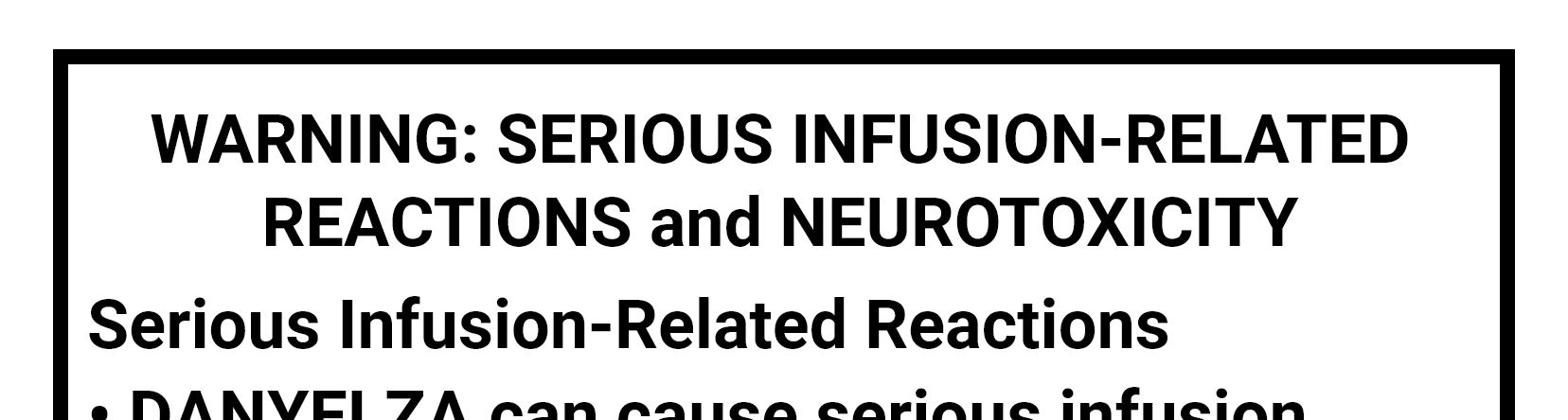
The stepped-up infusion strategy for naxitamab supports outpatient compatibility. The first infusion of each cycle runs 60 minutes, with subsequent infusions delivered over 30 to 60 minutes as tolerated. Observation for at least two hours after each infusion is required in a setting where cardiopulmonary resuscitation medication and equipment are available. DANYELZA carries a boxed warning for serious infusion-related reactions and neurotoxicity, with structured premedication built around the predictable acute toxicity profile.
The premedication regimen is built around two predictable toxicities. A 12-day course of gabapentin or other prophylactic medication for neuropathic pain begins five days before the first infusion of each cycle. Intravenous corticosteroids precede the first infusion of each cycle by 120 to 30 minutes. An antihistamine, H2 antagonist, acetaminophen, and antiemetic are administered 30 minutes before every infusion, and oral opioids precede each infusion by 60 to 45 minutes.
Timing of immunotherapy within the treatment arc remains a strategic variable under investigation. Current practice positions anti-GD2 antibodies after intensive cytotoxic therapy. Moving immunotherapy earlier in the treatment course is a direction the broader field's strategic agenda points toward, with the goal of integrating effective biological therapies before disease accumulates resistance.
Apply the 2026 Immunotherapy Evidence to Your Patient Population
Neuroblastoma immunotherapy in 2026 spans approved anti-GD2 agents, maturing cellular therapy platforms, advancing novel targets, and delivery refinements that shape day-to-day operational practice. Each domain carries direct implications for treatment planning, referral timing, and program infrastructure decisions.
For pediatric oncology teams evaluating treatment options for patients with relapsed or refractory high-risk neuroblastoma in the bone or bone marrow, contact us through DanyelzaHCP.com.
Sources
- DANYELZA (naxitamab-gqgk) [package insert]. New York, NY: Y-mAbs Therapeutics, Inc.; 2024. https://labeling.ymabs.com/danyelza
- Cheung NKV, Guo H, Hu J, Tassev DV, Cheung IY. Humanizing murine IgG3 anti-GD2 antibody m3F8 substantially improves antibody-dependent cell-mediated cytotoxicity while retaining targeting in vivo. Oncoimmunology. 2012;1(4):477-486. https://pmc.ncbi.nlm.nih.gov/articles/PMC3382886/
- Lisby S, Liebenberg N, Bukrinski J. Naxitamab, an antibody with distinct complementary determining regions and high binding affinity to disialoganglioside GD2 [abstract]. Pediatr Blood Cancer. 2020;67:S281-S282. Presented at the SIOP virtual congress. Abstract #945. October 16, 2020.